
When Cabbage sits in your Refrigerator instead of on your Plate
On creative exhaustion and appreciating art inwardly and outwardly
Culinary Exhaustion
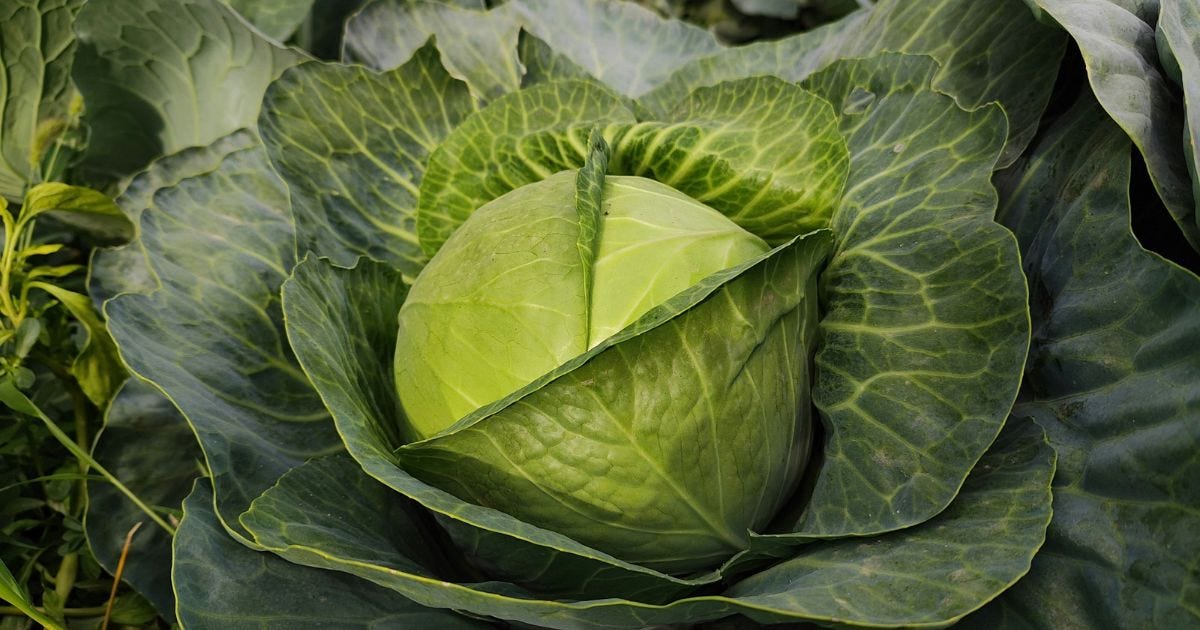
The NYT newsletter arrived in my inbox and it was about cabbage recipes. I love cabbage. I clicked and found myself staring at a beautiful picture of sweet, seared wedges. I could taste their melty goodness in my mind. I was excited and looked up two other recipes to compare the spices and finally created a hybrid. “Cabbage” went on the top of my grocery list because the produce department is the first part of the store I walk into, and I arrange my list according to the location in the store. The produce department flooded six months ago and for a while, there was a big room in the center of it—a walled off space, near the broccoli and next to the packaged nuts and dried fruits. It hid the repairs that were going on inside it. It had rained, hard, and the roof collapsed and water poured through the hole like a raging river. Gallons and gallons. By the time the store reopened, the only sign of the flood was the repair-room. (That and the floors. The floors were cleaner than I had ever seen.) Now the room is gone and the produce, not the flood, is once again focus of the space. At the store, I debated the merits of Napa vs Green cabbage and decided on a small, round head, larger than a grapefruit but smaller than some melons—perhaps a pomelo-sized cabbage—that was perfect for me. At home, I wrapped the head in a crumpled old grocery bag and put it into the produce drawer in my new refrigerator. I’m proud of this drawer. I chose it specifically because it spans the width of my refrigerator and I can fit celery and large bundles of summer kale inside. Everything was ready but I didn’t cook the cabbage that night, nor the next night, nor the one after that. I wanted to. But my capacity for being creative is thin, washed away by the stresses of the world around me. It’s ironic that it’s hardest to bring the spirit of openness and creation in the times you need it most. It hides away like a mole scurrying under a pile of leaves. My dog chases the smell but by the time she gets there, the mole is gone.

Mindfulness or awareness of art?
There is a difference between a mindfulness [Skt shamatha] approach to art and an awareness [Skt. vipashyana] approach to art. In the case of mindfulness, there is a sense of duty and restriction; a demand is made on us to develop acute, precise mindfulness. Although the tension of being mindful may be very light—we are just touching the verge of the breathing process and there is a sense of freedom—nevertheless, it is still a demand we place on ourselves. In the case of awareness experience, there is simply appreciation. Nothing is hassling us or demanding anything from us. Instead, by means of awareness practice, we could simply tune in to the phenomenal world both inwardly and outwardly.
~ True Perception: The Path of Dharma Art by Chögyam Trungpa
Chögyam Trungpa’s perspective on the difference between a mindfulness approach to art (and I would add, anything creative) and an awareness approach is interesting. With mindfulness, you direct your attention, however lightly, to your process. But with awareness, you are simply appreciating. As Trungpa says, “[you can] simply tune in to the phenomenal world both inwardly and outwardly.”
I added emphasis on the inward aspect of tuning in because I think it’s important. When you bring your inner self to your awareness, you get a full sense of the experience. You’re more grounded, open, expansive. Inward awareness allows you to merge with the experience and if you’re lucky, become that experience.
The other day, a friend was describing an aikido workshop she had taken with a master. The master had described the progression of learning various aikido moves: “First you learn how to raise your arms and you raise them. Later, your arms raise by themselves. Finally, the raising lifts your arms. Raising happens.”
To me, this progression illustrates the span between mindfulness and awareness—from being mindful of correct form, to eventually appreciating the movement inwardly and outwardly.
It’s important to pause and remind ourselves: the mindfulness approach that Trungpa talks about is not better or worse than the awareness approach. Each have their place. Each are parts of our embodied experience.

Reflection
How has exhaustion, fatigue, and overwhelm impacted your sense of creativity and aliveness? What can you do to connect with the spark of vitality again?
How do you experience mindfulness or awareness? Does one feel more full than the other? In your body, where does mindfulness live? Where does awareness live?

Chakra Practice - Week 2 Recap
Whelp, this recap will be short. This month I plan to do a series of movements that open and balance my chakras.
I did them—for two days—and then fell off the wagon. It’s not that I didn’t enjoy the practice; I found it very satisfying. It’s that the stresses of my personal life and the world around me have brought me to a stop. And with this, I’m experiencing the common irony: I can’t do the practices that would most help me be able to do my practices.
My alternative? A friend gave me a rebounder to play around with for a month. I’ve been bouncing—sometimes short little sessions and sometimes more vigorous, sweat-producing workouts. I don’t have to think hard or learn anything new. I just bounce.
And in terms mindfulness vs awareness, I would put my bouncing sessions in the mindfulness category. I direct my attention to what I’m doing but I’m not always tuned into the total experience of it. It’s what I can do right now.

Threshold Podcast: Being with the emotions surrounding death
The death of someone close can prompt a myriad of emotions or a surprising lack of them. Contemplating our own death can also produce a variety of feelings.
This week Emily Conway and I talk about what it means to be with the emotions of death and how you can welcome the experience openly.
Monday, March 16th at 11:00 CT
To catch up on all the old podcasts, click here.
THRESHOLD LIVE PODCAST



Right now, I’m trying to exercise with very unpredictable energy levels, all the time aware that the movement helps that energy level. It’s not easy! Even the idea of getting some kind of spark back, makes me tired:). So I’m just getting up and putting one foot in front of the other, some days to greater effect than others. Much like your bouncing!
Cabbages keep. It'll be there when you're ready to try one of those new recipes. In the meantime, keep bouncing and breathing and doing what you can to take care of you. (Whether you are being mindful or practicing awareness. Either one. Just take care of you!) Hugs, Susan